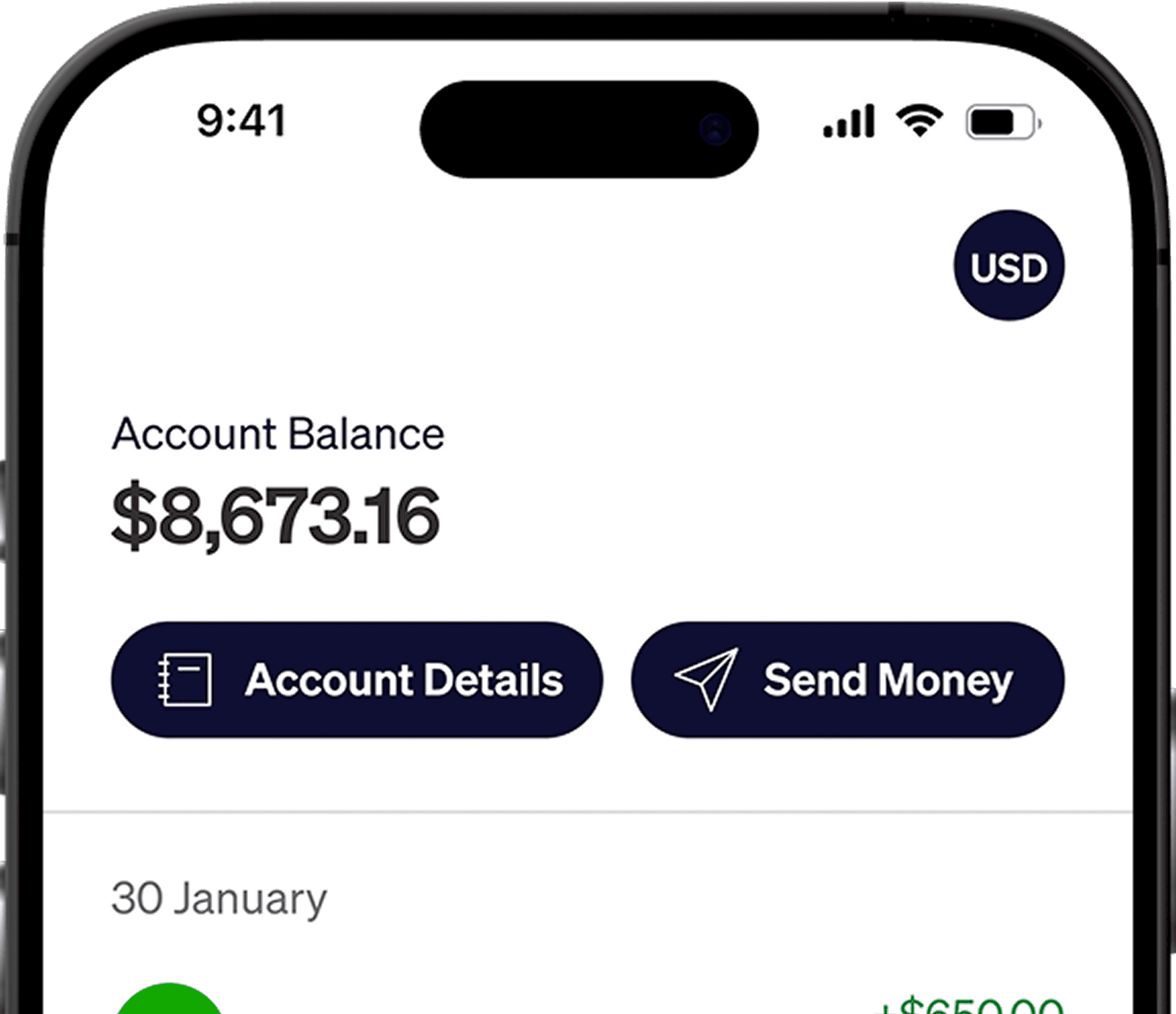




Remote sends contractor payments to the deposit method saved in your profile after your client funds the invoice. Remote lists Sri Lanka with three payout currencies, so the invoice currency and the receiving account together decide your conversion cost. ACH (US bank transfer) availability depends on your profile, so confirm it before you choose a route.
Check which Remote payment rules apply
This guide covers independent contractors. If you are employed through Remote's Employer of Record service, follow your employment payment instructions and ask your HR contact about your options.
Payment and withdrawal methods available
For contractors, Remote uses the deposit method saved in your profile to decide how each payment is sent. Remote's contractor coverage page lists Sri Lanka with LKR, EUR and USD as payout currencies.
Local bank account in rupees: You add your Sri Lankan bank account and receive LKR after Remote converts the payment. This takes no setup on your side, but the conversion happens before the money reaches you, at the rate applied by Remote and its payment partners.
USD through a virtual account: Remote's virtual-account guide explains how providers supply local bank details, including US details, which contractors can add to Remote. Eligibility depends on the provider and where you live.
Using Elevate Pay: Receive USD through ACH, then convert to rupees when you choose. Service export proceeds must reach Sri Lanka within 180 days of providing the service; see how Sri Lankan freelancers get paid. Our Remote setup guide covers the details. Availability depends on your Remote profile, so check it in Step 1 below.
International USD wire: If your deposit options include an international USD wire, ask the receiving bank about intermediary and incoming charges. We receive ACH transfers, not wires, so do not use this route for that account.
What affects your fees and timing
Remote contractor costs depend less on a fixed withdrawal fee and more on how your invoice is set up and where the money goes.
Invoice currency decides who pays for conversion. Remote explains two approaches:
When payment is in your currency and goes to a matching local bank account, the client covers FX and transaction costs so you receive the agreed target amount. Remote says it passes on its payment provider's charges.
If you invoice in the client's billing currency, such as USD, but receive another currency, the conversion cost can fall to you.
Remote's fee rule is that matching client and contractor currencies, paid through a local payout, carry no contractor fee. Its guidance also warns that a same-currency payment sent by SWIFT can pick up correspondent bank fees of $20 to $50 on arrival.
The rate is locked early: Remote's guaranteed payout guidance says the exchange rate is determined when the invoice is created and can be held for up to 90 days. The rupee is not on its list of currencies excluded from guaranteed payouts.
Timing: Remote's contractor payment guide says payouts occur one to three business days after it receives the client's funds. Client funding is a separate stage, and Remote lists its timing by payment method rather than as a single range.
Fee and speed table
Route | Who bears conversion cost | Typical timing | What you receive |
|---|---|---|---|
Local Sri Lankan bank (LKR), invoiced in LKR | Client, through Remote's conversion rate | 1–3 business days after client funds reach Remote | LKR |
Local Sri Lankan bank (LKR), invoiced in USD | You, at the rate set at invoice creation | 1–3 business days after client funds reach Remote | LKR |
International USD wire to a Sri Lankan bank | Provider SWIFT fee plus possible $20–$50 correspondent-bank fees | Estimate for the selected wire route | USD, if the account is in USD |
Local USD payout to accepted US details, if available | No contractor fee if currencies match and Remote treats the payout as local | Use Remote's estimate after client funding | USD |
Source: Remote contractor payment fees. Invoice currency, payout currency and client setup affect the charges. Review your invoice and deposit method together.
Step by step: check and add Elevate Pay details
Step 1: Confirm the route and open your account
Ask Remote whether your profile can receive USD through ACH to Elevate Pay. Once confirmed, follow the Sri Lanka account-opening guide.
Step 2: Copy your account details
In the Elevate Pay app, copy your account number, ACH routing number and account holder name.
Step 3: Open Deposit methods in Remote
Follow Remote's deposit-method instructions: open Deposit methods in your dashboard, then Add deposit method.
Step 4: Add the supported receiving details
Use the USD deposit option confirmed for your profile and enter your Elevate Pay account number, ACH routing number and matching account holder name. The selected bank country must match the actual receiving bank's location. If USD or the required bank destination is missing, contact Remote. Keep your true country of residence on your profile.
Step 5: Complete verification
Complete any bank-account or identity verification Remote requests before the next payment.
Step 6: Confirm your invoice currency
Set both the invoice currency and payout currency to USD with your client if you want to receive dollars. Remember the rate is fixed when the invoice is created.
Step 7: Receive and move your money
After Remote receives your client's funds, track the deposit against its arrival date. Receiving ACH is free. When you need rupees, LKR transfers cost a flat $1.50 fee. The maximum is $5,000 per transfer, so a larger amount goes as more than one transfer.
Elevate Pay is a fintech company, not a bank. Banking services are provided by Merchants Commercial Bank, Member FDIC.
Common setup mistakes to avoid
The saved bank details do not match the details in the Elevate Pay app.
The name in Remote is different from the account holder name.
The routing number and account number are entered in the wrong fields.
The payment is set up as a wire although the receiving account requires ACH. Contact our support team in the app if you need help checking the transfer type.
Frequently asked questions
I am a Remote.com EOR employee. Can I use a USD account for my salary?
Ask Remote or your HR contact which salary accounts your employment and local payroll arrangements allow. The contractor setup above is for contractor invoices.
Why was my Remote.com payment delayed?
Check the invoice's funding status, receiving details and verification. Remote must receive the client's funds before sending the payout, and it lists client funding times by payment method. If the stated arrival date passes, contact Remote with the invoice and payment references.
Check your deposit method
Confirm invoice currency and the supported deposit route with your client before the next payment. For other platforms, read our guides on Deel contractor withdrawals and withdrawing Gusto payments. For a broader comparison, see how Sri Lankan freelancers get paid.
How we checked this
We checked Remote's contractor fee, payment, deposit-method and country-coverage pages on 21–22 September 2026. Remote lists Sri Lanka with LKR, EUR and USD. It does not name Elevate Pay or confirm US ACH for every Sri Lankan profile, which is why Step 1 asks you to confirm the route first. Remote publishes client funding times by payment method rather than as a single range. No test payment was made.


Recent Articles






DO MORE WITH ELEVATE PAY
Transfer money with Elevate Pay with low fees and competitive FX rates. Our users love us for transparency, security and more.